HMR vs. Plywood: Which is better for built-in cabinets? | 3BS

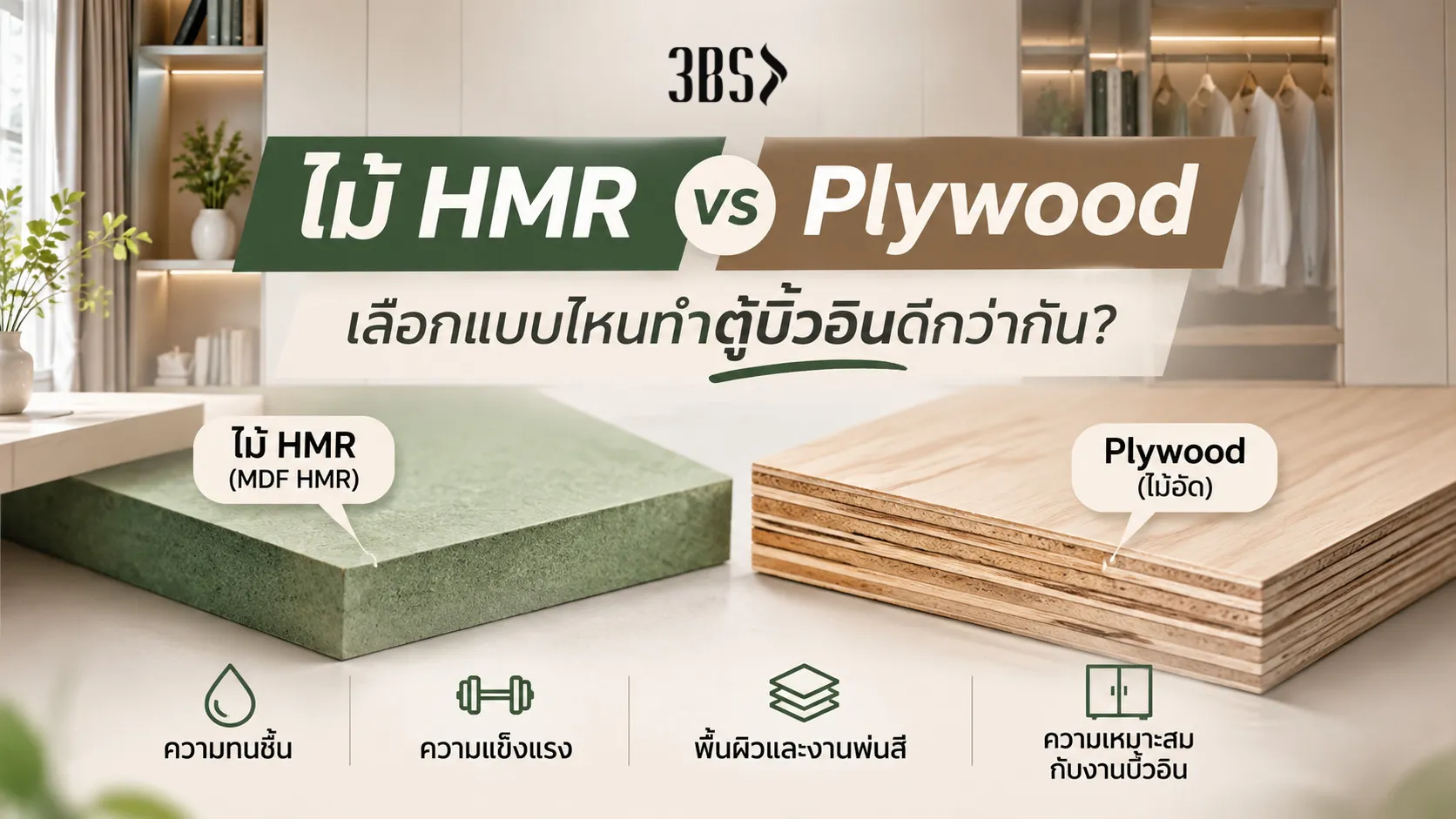
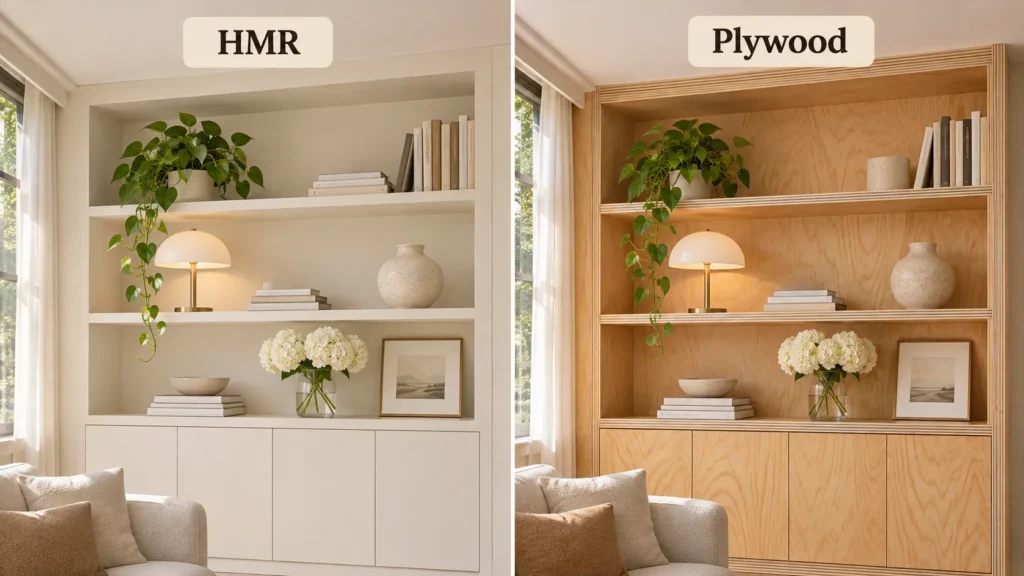
Both HMR and plywood are suitable materials for built-in cabinetry, but they have different advantages. HMR wood excels in surface smoothness, paintability, and moisture resistance, making it ideal for interior decoration requiring meticulous detail. High-quality plywood, on the other hand, offers advantages in strength, screw holding, and load-bearing capacity, making it suitable for structural work and shelving. Ultimately, material selection should consider the intended use, environment, and quality of the wood panel to ensure the furniture remains beautiful and functional for a long time.

Get to know HMR wood and plywood: what are the differences?

The selection of materials for interior design is not solely based on the aesthetic appeal of the surface, but also includes the internal structure and properties of the material that affect its long-term use.

What is HMR wood (HMR MDF)?

HMR (High Moisture Resistance) wood is a popular name for high-moisture resistant MDF boards. Made from wood fibers mixed with binders and compressed into sheets, the manufacturing formula is developed to withstand higher moisture levels than standard MDF.

The key features of HMR wood are its fine and consistent texture, resulting in a smooth surface. This makes it ideal for painting, grooving, and precision furniture, allowing for diverse interior design styles ranging from Modern Minimalist to Modern Luxury.

Furthermore, its moisture resistance reduces the risk of swelling compared to regular MDF under appropriate usage conditions. However, HMR wood is not 100% waterproof , so it is necessary to properly seal the surface and edges, and avoid prolonged direct contact with water.

What is plywood?

Plywood is a composite wood panel made by layering multiple thin sheets of wood with alternating grain directions and bonding them together with glue under pressure . This alternating layering structure increases the stability and strength of the panel, making high-quality plywood suitable for load-bearing applications such as cabinet frames, shelves, and furniture requiring strong fasteners.

However, the quality of plywood varies depending on the type of wood, the number of layers, the quality of the glue, and the manufacturing grade, especially its moisture resistance, which differs among products.

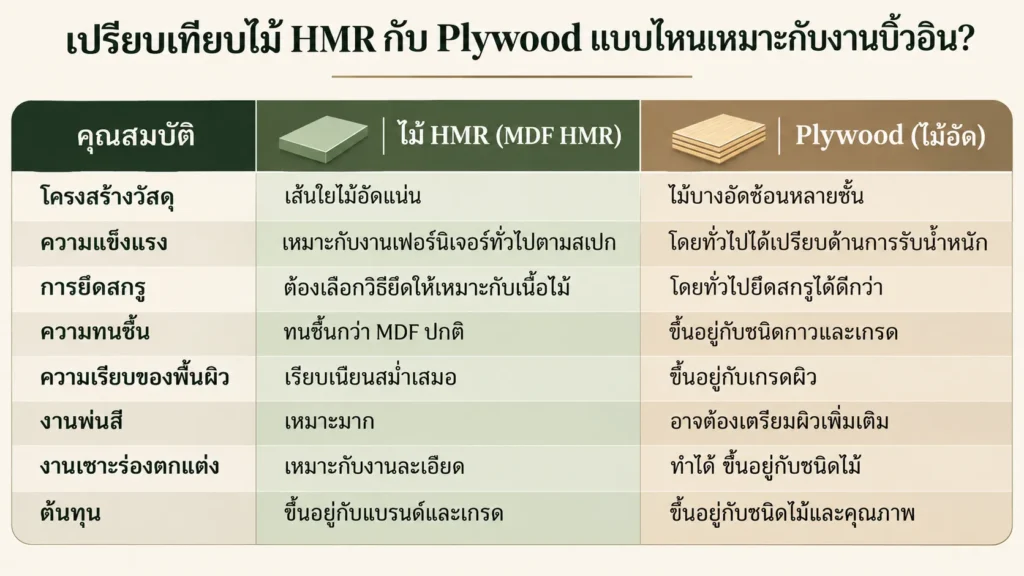
Comparing HMR wood and plywood, which is better suited for built-in cabinetry?

Note: The comparisons are general characteristics. Actual performance depends on the product, thickness, manufacturing method, and installation. It cannot be concluded that all grades of plywood are stronger or more moisture-resistant than all types of HMR wood.

For different types of built-in cabinets, should you choose HMR or Plywood?

Wardrobes and storage cabinets

For wardrobes and storage cabinets in bedrooms, HMR wood is an attractive option because of its smooth surface, making it suitable for painting and decorating door panels. It also has moisture resistance properties, increasing its suitability for indoor use.

For long shelves or those needing to support heavy weight, consider using suitable plywood or adding support points to prevent shelf sagging.

Built-in kitchen cabinets

Kitchen areas are vulnerable to steam, moisture, and water leaks, so material selection is crucial. HMR wood can be used for cabinet doors and interior components not in direct contact with water, provided proper surface and edge finishing are applied. For the area under the sink, consider moisture-resistant plywood or specialized waterproof materials depending on the actual risk.

TV cabinets and wall-mounted furniture.

TV cabinet and wall panel projects often emphasize surface continuity and design details. HMR wood is therefore ideal for manufacturing painted cabinet doors, decorative panels, and intricate grooved designs.

For mezzanines or heavy-duty structures, consider using plywood in conjunction with appropriate fastening and support systems.

Why did 3BS choose HMR wood for its interior design projects?

For 3BS Interior Design & Construction, material selection is a crucial part of the design process. The quality of furniture is not reflected solely in its aesthetic appeal, but also in its suitability for use and long-term maintenance.

HMR wood is one of the materials 3BS chooses for built-in furniture in suitable locations, thanks to its properties that meet a wide range of design requirements.

1. Moisture-resistant properties, suitable for Thailand's climate.

Start by inspecting the roof and insulation, and consider window placement in relation to sunlight direction . Installing sunshades, choosing heat-reducing glass, and appropriately positioning curtains can help minimize heat entering the house while still allowing sufficient natural light.

For interior design, a balance between natural light, heat, and functionality will create a bright, airy atmosphere suitable for long-term living.

2. The smooth surface reflects the sophistication of the decorative work.

The consistent material texture supports smooth painting and finishing, ideal for built-in projects requiring a beautiful surface and seamless decorative flow.

3. Supports area-specific design and living styles.

HMR wood can be cut and grooved to shape into custom furniture components, making it ideal for specific space-specific designs, including wardrobes, storage cabinets, and uniquely designed door panels.

4. Consistent with the Longevity Design concept.

From 3BS’s perspective, Longevity Design doesn’t mean choosing the most expensive material, but rather considering which material is best suited to the function of each component.

Using HMR wood in the right places, combined with quality structural design, edge banding, and installation, can help support the aesthetics and durability of furniture over the long term.

How to choose materials for beautiful and long-lasting built-in cabinetry?

While HMR and plywood have different properties, the quality of built-in cabinetry doesn't depend solely on the material choice. Important factors to consider include:

  • The grade and thickness of the material should be suitable for the weight and application.

  • Surface and edge banding should be used to reduce the risk of moisture damage.

  • The structure and mounting system, especially shelves, hinges, and fasteners,

  • should be considered. Indoor air quality is also a factor; consider wood panels with formaldehyde emission certification according to relevant standards.

Choosing materials wisely from the design stage helps reduce the risk of repairs and increases long-term cost-effectiveness.

In summary, which is better for built-in cabinets: HMR or plywood?

HMR wood is suitable for built-in applications requiring a smooth surface, paintability, and moisture resistance for interior use. High-quality plywood, on the other hand, is ideal for structural work, shelving, and load-bearing components.

Neither material is best for every area; choosing the right material for its function creates a balance between aesthetics, strength, and budget.

For 3BS, good interior design begins with an understanding of materials and manufacturing details to create spaces that meet today’s needs and are ready for future use, following the Longevity Design concept.

A good home isn’t designed to be beautiful only on the first day, but should retain its value throughout its occupancy.

3BS Interior Design — Design for Better Living. Interested in interior design services, built-in furniture, or renovating your space to meet long-term needs? Consult the 3BS team to plan a space that suits your lifestyle and requirements. Consult and plan your interior design with 3BS.

Asked Questions (FAQ)

1. Which is stronger, HMR wood or plywood?

Generally, good quality plywood offers advantages in terms of strength, load-bearing capacity, and screw holding, especially for structural applications. However, the grade and thickness of the material should also be considered.

2. Is HMR wood more moisture-resistant than plywood?

It’s not possible to conclude this in all cases, as HMR wood has higher moisture resistance than regular MDF, while plywood has varying levels of moisture resistance depending on the type of glue and material grade. Therefore, it’s advisable to check the manufacturer’s specifications before making comparisons.

3. Can HMR wood be used to make entire built-in cabinets?

It can be done in some forms, especially for indoor storage cabinets and wardrobes, but the thickness, shelf spacing, and weight-bearing points should be designed appropriately for the intended use.

4. Should I choose HMR or Plywood for kitchen cabinets?

HMR wood is suitable for components requiring a smooth surface and protection from direct water contact. For areas susceptible to moisture, consider appropriate grades of plywood or specialized waterproof materials.

Because every act of trust matters to 3BS … we want you to be heard.

A portion of the voices that trust 3BS.

3BS Interior Design — Designing for a long and healthy life.

If you’re planning to design an interior or create a healthy living space for your family…
3BS is ready to take care of you with Longevity Design, meticulously crafted in every detail, from air management and materials to integrating nature into the space.

Contact 3BS today to create a home where “every breath is an investment in your health.”

3BS is ready to provide consultation. Free of charge.

“3BS Company provides interior design services for houses, condos, and offices. Our professional team handles everything from design and materials to construction, offering services in Bangkok and nationwide.”

Contact the 3BS team today to start designing your dream space.
Line @3bsinterior Tel 065-240-4795 Website www.3bscompany.com

Leading organizations trust 3BS

Articles

Mid-century Modern Style คืออะไร? รู้จักเสน่ห์การแต่งบ้านสไตล์วินเทจโมเดิร์น | 3BS

Timeless by Design, Modern by Nature. Mid-century Modern คือสไตล์การตกแต่งภายในที่ได้รับแรงบันดาลใจจากงานออกแบบในช่วงกลางศตวรรษที่ 20 โดดเด่นด้วยเส้นสายเรียบง่าย เฟอร์นิเจอร์รูปทรงมีเอกลักษณ์ การใช้ไม้ธรรมชาติ และสีสันที่สะท้อนกลิ่นอายย้อนยุคอย่างมีรสนิยม หัวใจสำคัญของสไตล์นี้คือการผสานความงามเข้ากับประโยชน์ใช้สอย ทำให้ Mid-century Modern ยังคงเป็นหนึ่งในแนวทาง Interior Design ที่สามารถนำมาประยุกต์ใช้กับบ้านยุคปัจจุบันได้อย่างลงตัว เสน่ห์ของ Mid-century Modern
Read More »

บริษัท Interior Design กับผู้รับเหมา ต่างกันอย่างไร? | 3BS

Design with Purpose. Build with Precision. Live with Confidence. บริษัท Interior Design และผู้รับเหมาตกแต่งภายในมีบทบาทแตกต่างกัน โดยบริษัท Interior Design มุ่งเน้นการวางแนวคิด ออกแบบพื้นที่ และกำหนดรายละเอียดให้สอดคล้องกับไลฟ์สไตล์ของผู้อยู่อาศัย ขณะที่ผู้รับเหมามีหน้าที่หลักในการดำเนินงานก่อสร้าง ผลิต และติดตั้งตามแบบที่กำหนด อย่างไรก็ตาม ปัจจุบันมีบริษัทที่ให้บริการทั้งออกแบบและก่อสร้างแบบครบวงจร หรือ
Read More »

บริษัท Interior Design กับผู้รับเหมา ต่างกันอย่างไร? | 3BS

Design with Purpose. Build with Precision. Live with Confidence. บริษัท Interior Design และผู้รับเหมาตกแต่งภายในมีบทบาทแตกต่างกัน โดยบริษัท Interior Design มุ่งเน้นการวางแนวคิด ออกแบบพื้นที่ และกำหนดรายละเอียดให้สอดคล้องกับไลฟ์สไตล์ของผู้อยู่อาศัย ขณะที่ผู้รับเหมามีหน้าที่หลักในการดำเนินงานก่อสร้าง ผลิต และติดตั้งตามแบบที่กำหนด อย่างไรก็ตาม ปัจจุบันมีบริษัทที่ให้บริการทั้งออกแบบและก่อสร้างแบบครบวงจร หรือ

Read More »